
How to Retire to the Riviera Maya of Mexico: A Complete Guide to Affordable Paradise
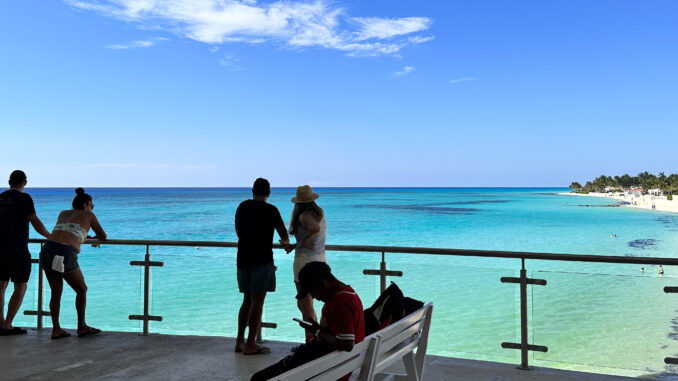
For decades, Mexico has been one of the most popular destinations for retirees from the United States, Canada, and Europe. And within Mexico, few regions have captured the imagination like the Riviera Maya, a 100-mile stretch of Caribbean coastline running from Puerto Morelos to Tulum. Known for its white-sand beaches, turquoise water, Mayan ruins, cenotes, and vibrant expat communities, the Riviera Maya is more than just a vacation hotspot, t’s an increasingly popular place to retire affordably while enjoying a high quality of life.
If you’ve ever dreamed of trading cold winters and high expenses for palm trees and ocean breezes, this guide will walk you through everything you need to know about retiring to the Riviera Maya: cost of living, medical care, quality of life, lifestyle, legal requirements, and practical considerations.
Why Choose the Riviera Maya for Retirement?
The Riviera Maya checks nearly every box for retirees seeking a better quality of life at a lower price. Here are some of the top reasons people make the move:
- Lower cost of living than the U.S., Canada, or Europe.
- World-class beaches and warm weather year-round.
- Modern medical care with English-speaking doctors and hospitals that cater to international patients.
- Proximity to the U.S. and Canada flights from Cancun to many North American cities take less than 4 hours.
- Rich cultural life with Mayan history, cuisine, music, and festivals.
- Strong expat community for social connections and support. This means there are others who have paved the way, making it easier to get information from those that have already done it. It also makes the transition easier because there is a large group of English-speaking people to make new friends with.
- Variety of living options from condos in Playa Del Carmen to luxury villas in gated communities or eco-living in Tulum.
Cost of Living in the Riviera Maya
One of the most appealing aspects of retiring in Mexico is how much further your money goes. While costs depend on your lifestyle, most retirees find they can live comfortably on 40–60% less than in the U.S. or Canada.
Housing Costs
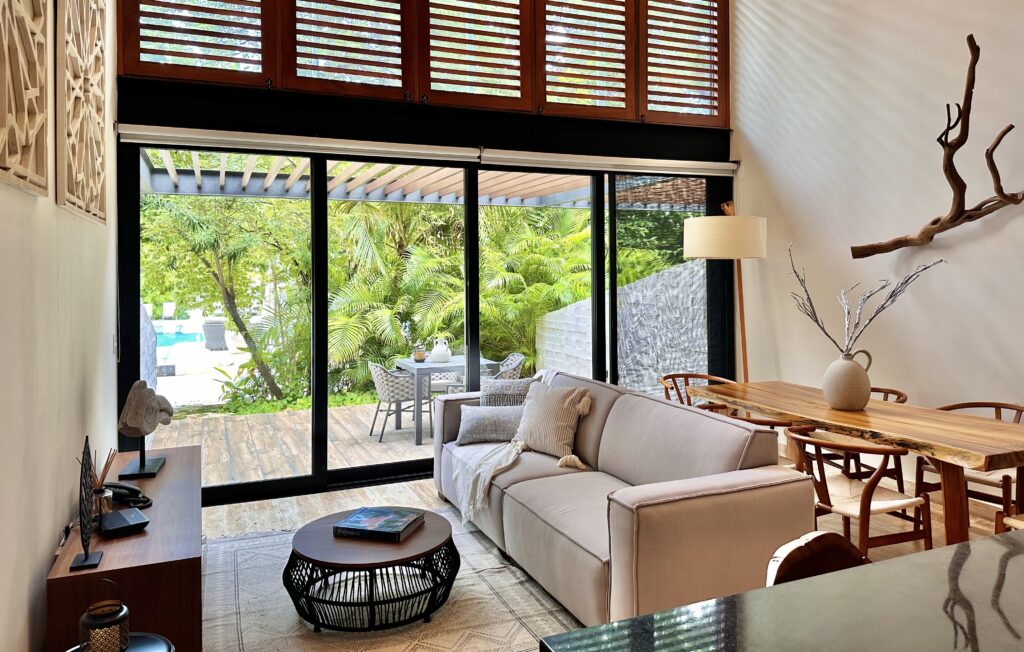
- Condos: In Playa Del Carmen, a modern one-bedroom condo near the beach can be rented for $900–$1,500 USD/month; further inland, rentals can be as low as $500–$700 USD/month.
- Buying property: Condos start around $150,000 USD in Playa Del Carmen, with luxury beachfront units reaching $500,000–$1M+. Houses in gated communities like Playacar or Puerto Aventuras often range between $300,000–$800,000 USD.
- HOA fees: Condo fees average $200–$400 USD/month, depending on amenities like pools, gyms, and security.
Utilities & Services
- Electricity: $40–$100 USD/month (can be higher if running A/C full-time).
- Internet & phone: $30–$50 USD/month.
- Maid service: $25–$40 USD for weekly cleaning. This depends on how many days a week and how large of a place you have. Some home workers will even prepare meals if you want.
Food & Dining
- Local markets: Fresh produce and groceries cost 30–50% less than in the U.S.
- Dining out: A casual meal at a local restaurant may cost $6–$12 USD, while a mid-range restaurant runs $20–$40 USD for two. Upscale dining in Playa Del Carmen or Tulum can rival U.S. prices. Tip: Many restaurants give locals a 10% off. So, becoming a resident has its perks. See our article on local discounts for residents and what you can get.
Transportation
- No need for a car in Playa Del Carmen or Tulum: taxis, colectivos (shared vans), and ADO buses are cheap and reliable. If you do drive, gas costs are about the same as the U.S. and Canada. Insurance is also inexpensive. Most people pay under $1000 USD a year. See our guide to what areas of Playa Del Carmen are walkable and where you don’t need a car. If you do decide to have a car, it is usually better to buy one in Mexico. Import taxes can be high for brining your own car and parts and service can be different for models sold in Mexico.
How much do you need monthly to retire in Mexico?
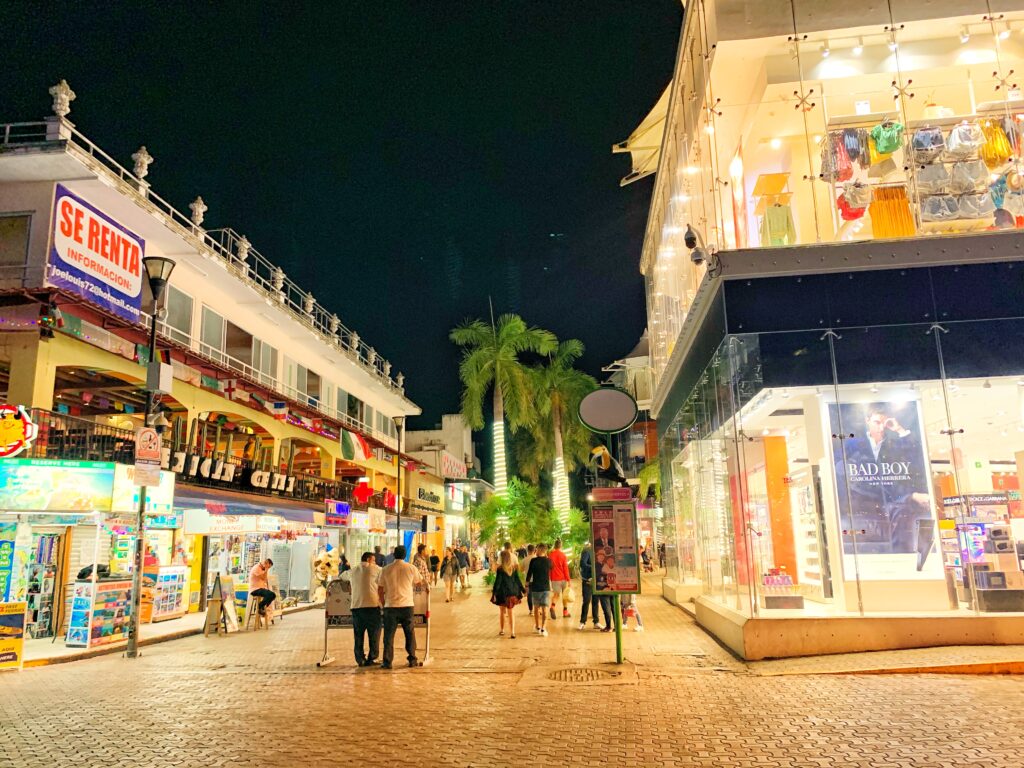
On average, a single retiree can live comfortably on $1,800–$2,500 USD/month in Playa Del Carmen or Tulum, while couples often report living well on $2,500–$3,500 USD/month.
When you ask people what their monthly budget is, the responses are all over the place. There are some big factors in how much you will spend living in Mexico. Here are some of the biggest ones.
Note: Your first six months will be the most expensive. This is the period that you are adjusting and want to try many things. Once you start to find where things are and figure out how to do things more locally, things become cheaper. Also, the more you adapt, the cheaper things become.
- Your biggest expenses will be rent or HOA fees depending on if you purchase. Rent can take about 1/2 of your budget.
- Utilities are pretty well priced. Water service is cheaper in the Riviera Maya than most places. Electric is where you have to be careful. You can pay between $25 USD a month to $400 USD. The more you use, the less subsidized it gets.
- If you want to eat out 5 times a week, this can also be about $500 USD a month if you go to a nice restaurant or for diners.
- If you keep a similar lifestyle as before, you can add to your expenses. Eating imported foods is more expensive in Mexico for example. Ordering special channels on TV and adding subscription services will add to your expenses.

Medical Care in the Riviera Maya
One of the biggest retirement concerns is healthcare, and Mexico delivers well here.
Quality of Care
The Riviera Maya, particularly Playa Del Carmen and Cancun, is home to modern private hospitals with English-speaking doctors, many of whom trained in the U.S. or Europe. Facilities like Hospiten Playa Del Carmen, Galenia in Cancun, and smaller clinics provide high-quality care at a fraction of U.S. costs.
Cancun has the most specialty hospitals. If you go to Merida in Yucatan State (about 4 hours from the Riviera Maya) you can find almost any kind of doctor and medical care you need. Merida is one of the best places in Mexico for medical care and is on par with many other countries.
Costs
- Doctor’s visit: $30–$60 USD.
- Specialist visit: $50–$100 USD.
- Dental cleaning: $30–$50 USD.
- Major surgery: Often 50–70% cheaper than U.S. hospitals.
Insurance Options
- Private insurance: International expat health insurance plans range from $1,500–$5,000 USD/year, depending on age and coverage.
- Pay-as-you-go: Many retirees choose to pay cash for routine care, since it’s so affordable. The really cheap option is going to local doctors’ offices that are next to Pharmacies. Often a basic visit cost only a few dollars. Generic drugs are often very affordable in Mexico. Most of the time they are only about 20% of the price.
- IMSS (Instituto Mexicano del Seguro Social): Retirees with residency can join the national health program for about $500-800 USD/year, though services may not be as fast or English-friendly as private hospitals. This should be a last option for most. It offers very basic care.
Quality of Life in the Riviera Maya
Beyond cost savings, the Riviera Maya offers an excellent quality of life that keeps retirees active and fulfilled.
Weather & Lifestyle
- Year-round warmth (averaging 75–85°F).
- Outdoor living: beaches, cenotes, snorkeling, diving, and Mayan ruins.
- Wellness scene: Yoga, meditation, and holistic health are thriving, particularly in Tulum. Places like Playa Del Carmen offer meet up classes, pickleball, tennis, running tracks, gyms, and all sorts of independent classes that you can sign up for.
Community & Social Life
- Large expat networks: Playa Del Carmen has thousands of expats from the U.S., Canada, and Europe. It is fairly easy to find groups on Facebook that are for French speakers, parents with kids, Black expats, semi-retired expats, young retirees, and others.
- Meetups, clubs, and volunteer opportunities make it easy to stay social.
- Language: While learning Spanish is helpful, English is widely spoken in tourist and expat areas.
Culture & Entertainment
- Food: Traditional Yucatecan cuisine (cochinita pibil, sopa de lima), plus international dining.
- Festivals: Day of the Dead, Carnival, music festivals like the Riviera Maya Jazz Festival, food festivals, etc.
- Travel access: Weekend trips to Cozumel, Isla Mujeres, Yucatan State, trips on the Tren Maya or even Guatemala and Belize. Flights within Mexico are easy and cheap.
Where to Retire in the Riviera Maya
Each town in the Riviera Maya offers a slightly different lifestyle:
- Playa Del Carmen: The most popular for retirees. Walkable, vibrant, with lots of amenities, medical care, and expat community. You might want to read our article about Is Playa Del Carmen safe to retire to?/
- Puerto Aventuras: Gated marina community, quieter, with golf and boating lifestyle. This area has less feeling of Mexico and almost Florida feeling.
- Akumal: Smaller, relaxed, famous for sea turtles and beachfront living.
- Tulum: Trendy and eco-chic, with yoga, wellness, and boutique living , but pricier and less developed in infrastructure.
- Puerto Morelos: A fishing village between Cancun and Playa, slower paced with a growing expat scene. You can find restaurants and stores here, but you might find yourself going to Cancun for shopping trips.

Legal & Practical Considerations
Residency & Visas
- Tourist visa: Automatically valid for up to 180 days but not suitable for long-term living. For many years people have used these visas to enter Mexico, live for a few months (up to 6) and return home. This has worked for many snowbirds (people that fly south for the winter). For those that want to live in Mexico, it is better to get a residential vias because a tourist visa is just for what it says.
- Temporary Resident Visa: This visa is good for one year and can be renewed up to 4 years, then you change to permanent visa usually. For retirees with proof of income or savings. Requires around $3,500 USD monthly income (varies by consulate). Valid up to 4 years. These figures change yearly and seem to go up each couple of years. The income requirement is proof that you can support yourself in Mexico without working locally.
- Permanent Resident Visa: For those with higher income/savings or after 4 years as a temporary resident. Often if you are retired, they will automatically offer the permanent visa first. This makes it much easier because these visas do not need to be renewed.
Banking & Money
- Many retirees keep accounts in both U.S./Canada and Mexico. Most expats will suggest keeping two accounts. One for keeping your money in your home country and one in Mexico. This makes it easier to pay things in the US like taxes and by having a Mexican account you can pay many services in Mexico easier.
- ATMs are widely available, but opening a Mexican bank account is useful once you have residency. Paying rents and taking out money all the time can get costly.
Safety
The Riviera Maya is generally safe, especially in expat neighborhoods and gated communities. Like anywhere, use normal precautions. See our guide on safety for residents here. We have a lot of good local tips because crime is different for tourists and residents.
Benefits of Retiring in the Riviera Maya
- Lower costs for housing, food, and healthcare.
- Beach lifestyle with year-round warm weather.
- Access to quality private healthcare at much lower cost.
- Strong expat community for easy social integration.
- Proximity to North America, making it simple to travel back home.
- Cultural richness and endless opportunities for exploration.
Challenges to Consider when moving to the Riviera Maya
- Heat and humidity can be intense in summer. If you have been several times to the Riviera Maya as a tourist or in the winter months, you might not be really prepared for the yearlong heat. It is good to visit at different times of the year to consider if it is good for you. Not everyone is cutout for the heat and humidity. That is why places like San Miguel, Mexico are popular because of the cooler climate.
- Hurricane season (June–November) brings tropical storms. We have no other real natural disasters. In the past 15 years there has not been a big hurricane that has hit the Riviera Maya. But when they do, it can severally impact everything.
- Construction and tourism can make some areas noisy or crowded. Living in a place where lots of tourist come, is also something that most people are not used to. See our article on Playa Del Carmen being loud and noisy.
- Residency requirements for visas require financial proof. This can be difficult for some. The process of getting residency starts in your home country. Then once approved, you finish the paperwork at immigration office in Mexico. Some choose to use an immigration facilitator to make it go smoothly, especially if your Spanish is lacking.
- Learning Spanish improves daily life but isn’t strictly necessary. Since many places in the Riviera Maya are used to tourists speaking English, it is common to find people that speak some. There are also a lot of expats and locals that make it easy to make friends with.
Final Thoughts on Retirement
Retiring in the Riviera Maya is a dream turned reality for thousands of expats every year. With its affordable cost of living, excellent medical care, warm weather, and rich lifestyle, it’s no wonder the region has become one of the top retirement destinations in the world.
If you plan carefully, choosing the right town, securing proper residency, and budgeting realistically, the Riviera Maya can offer you not just a retirement, but a new chapter of adventure, relaxation, and fulfillment.
For many, retirement here isn’t just about stretching dollars further , it’s about embracing a life filled with sunshine, culture, and community.
About The Author

My wife and I have had the Riviera Maya on our list of possible places to move to. Ecuador was on the list but it has become to unstable. Belize seems a little boring and we need to be closer to a big international airport. We look forward to coming this month to check things out. Thanks for your good articles.