
2026 Hurricane Season Forecast: What to Expect and Why Predictions Can Be Wrong
As the Atlantic hurricane season approaches (June 1 to November 30), early forecasts for 2026 are already shaping expectations. But as history has shown, especially in 2020, hurricane predictions can be directionally helpful yet still miss the mark in important ways.
We know hurricane talk can be scary, but in reality, it is just good to be prepared for when a big storm comes in our direction. For example: in the past decade the Riviera Maya has only had 4 hurricanes and 3 of those were in the same year. As far as the largest category 5 hurricanes, the last one was Hurricane Dean in 2007 which struck the south of Quintana Roo state. It is often once every 10 years or more that we have a category 4 or 5 make landfall and impact the Riviera Maya.
Hurricanes are the one natural disaster we face in the Riviera Maya. Fortunately, they are not as frequent as you think. It is however always to think and plan about preparation at the beginning of the season. See our detailed guide at the end of this article for lots of tips that we have collected over the years.

2026 Hurricane Season Forecast (Early Outlook)
Early forecasts for the 2026 Atlantic hurricane season suggest a near-average to slightly below-average year, largely due to the expected development of El Niño conditions.
Current Forecast Estimates (as of April 2026)
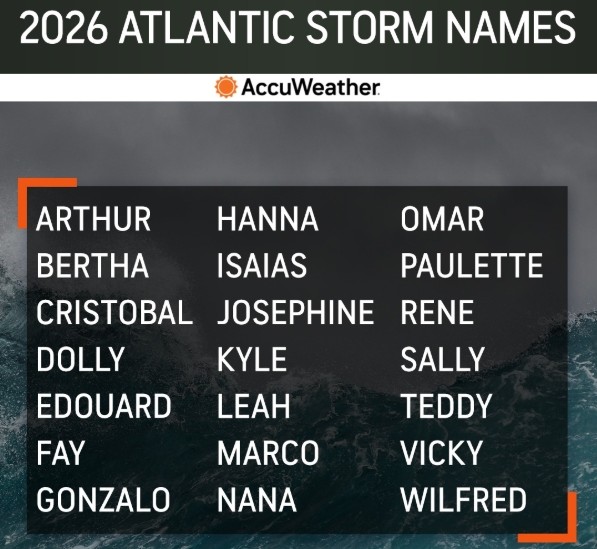
Several major forecasting groups have released early predictions for the 2026 Atlantic hurricane season, each offering slightly different outlooks based on their models and assumptions.
Colorado State University expects a relatively moderate season, predicting 13 named storms, including 6 hurricanes, of which 2 are forecast to become major hurricanes.
Tropical Storm Risk has issued a slightly lower forecast, calling for 12 named storms, 5 hurricanes, and just 1 major hurricane, suggesting a somewhat quieter season compared to average.
Meanwhile, AccuWeather provides a broader range to reflect uncertainty. Their forecast includes 11 to 16 named storms, 4 to 7 hurricanes, and 2 to 4 major hurricanes, indicating that conditions could vary significantly as the season develops.
Why 2026 May Be Less Active
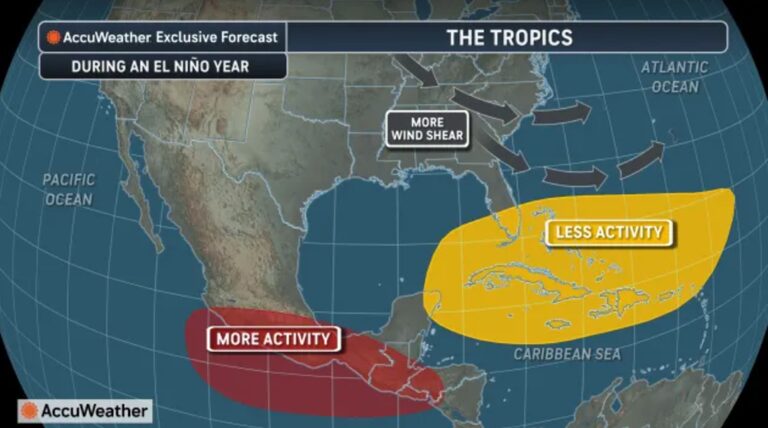
The main reason behind the quieter outlook is the likely development of El Niño, which tends to suppress hurricane formation by increasing wind shear across the Atlantic.
However, forecasts are far from unanimous. Some models, such as the University of Arizona’s, suggest a more active season due to warmer Atlantic sea surface temperatures. The takeaway: Even before the season begins, forecasts already show significant disagreement, highlighting uncertainty.
It is also important to know that storms that form in the pacific and make landfall on the other side of Mexico can impact us. There have been some slow-moving storms that dump feet of rain in a short period of time. Being prepared for flooding is also something to think about.
Why Hurricane Predictions Can Be Limited
Seasonal hurricane forecasts are based on large-scale climate patterns like ocean temperatures, wind shear, and El Niño/La Niña cycles. While these are useful indicators, they cannot predict individual storms, landfalls, or sudden changes in atmospheric conditions.
Forecasters themselves stress that:
- Conditions can shift rapidly between April and peak season (August–October)
- Small changes in ocean temperatures or wind patterns can dramatically alter outcomes
- It only takes one storm hitting land to make a season devastating
Case Study: 2020 Hurricane Season (Predictions vs Reality)
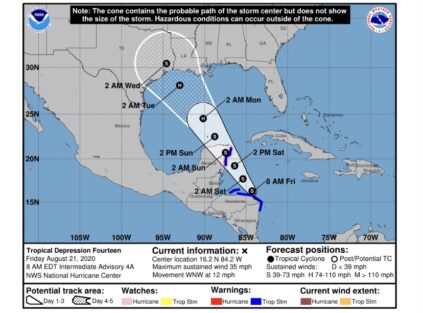
The 2020 season is one of the best modern examples of how forecasts can underestimate reality. If you were around in the Riviera Maya in 2020 you probably remember how it was a very crazy year. We had the pandemic going on, an on top of that about 7 hurricanes and storms that crossed near us or impacted the area. It seemed like we had back-to-back storms several times that year. Since it was one of the worst years in recent times, let’s look at what experts predicted and what was the reality.
What Was Predicted in 2020
In May 2020, NOAA predicted:
- 13–19 named storms
- 6–10 hurricanes
- 3–6 major hurricanes
Later, in August, the forecast was upgraded to:
- 19–25 named storms
Even then, it was considered an extremely active outlook.
What Actually Happened in 2020
The final numbers shocked forecasters:
- 30 named storms (record-breaking)
- 13 hurricanes
- 7 major hurricanes
The season was so active that meteorologists ran out of storm names and used the Greek alphabet, something that had only happened once before.
How 2020 Shows the Limits of Forecasting
Even after updating forecasts mid-season, experts still underestimated:
- Total storms exceeded the upper forecast by 5 storms
- Hurricanes exceeded projections
- Major hurricanes exceeded projections
This demonstrates a key limitation:Forecasts are better at predicting “above or below normal” than predicting exact totals.
How Accurate Have Hurricane Predictions Been?
Over the past decade, seasonal hurricane forecasts have generally been moderately accurate in trend but less precise in numbers.
General Accuracy Trends (Last 10 Years)
- Correct trend (above/near/below normal): ~70–80% of the time
- Exact storm counts: Often off by several storms
- Major hurricane counts: Frequently underestimated
Recent data shows that the average number of storms from 2016–2025 was about 18 per year, significantly higher than the long-term average of around 14. This alone shows how difficult it is to predict changing climate patterns.
Why Forecasts Miss the Mark
Several factors explain why predictions are imperfect:
1. El Niño Uncertainty
El Niño is one of the biggest drivers of hurricane activity, but its strength and timing are difficult to predict months in advance.
2. Ocean Temperature Variability
Even small increases in sea surface temperatures can dramatically increase storm intensity.
3. Rapid Intensification
Storms can strengthen quickly just before landfall, which seasonal forecasts cannot predict.
4. Climate Trends
Warmer oceans in recent years have led to more active seasons than historical averages suggest.
What This Means for 2026
Even though 2026 is currently forecast to be near or slightly below average, that does not mean it will be quiet where you are.
- A below-average season can still produce powerful hurricanes
- A single storm can cause major damage in one location
- Forecasts will likely change as the season approaches
In fact, early forecasts carry the highest uncertainty, and updates in June, July, and August often shift expectations significantly.
Final Takeaway
The 2026 hurricane season is currently expected to be moderate or slightly below average, largely due to El Niño conditions. However, history, especially the extreme 2020 season, shows that forecasts can underestimate real-world outcomes.
The most important lesson is simple: Do not focus only on the number of storms, focus on preparedness. Because when it comes to hurricanes, it only takes one to make a mess of things. Speaking of being prepared, we have compiled a long list of things to do before a hurricane and after one. It is here in this article entitled How to prepare for hurricanes plus all our best tips!
About The Author

We have had a pretty quiet hurricane season for a decade. I am waiting for the next big one. It will test all the new construction that has gone up.