

Why does Mexico have so many gated Communities?
Why Mexico has so many gated communities gets to the heart of how modern Mexican society, economics, and urban design have evolved over the last 30 years.
Mexico’s abundance of gated communities (“fraccionamientos” or “privadas”) is the result of a mix of security concerns, social aspirations, and real estate trends that have shaped the country’s cities and coastal regions — especially in places like the Riviera Maya, Mérida, Querétaro, Guadalajara, and Mexico City suburbs.
Here’s a detailed look of why there are so many gated communities in Mexico and how they work.
1. Security and Perception of Safety
The most important reason — real or perceived.
Since the 1990s, rising crime rates in many Mexican cities have led to widespread concern over personal and property safety, shaping how urban development evolved across the country. In response, real estate developers began marketing gated neighborhoods as secure enclaves offering protection and exclusivity, complete with 24-hour security guards, high perimeter walls, and controlled access points. These features quickly became symbols of modern, safe living and were heavily promoted as essential components of middle- and upper-class housing. Even in areas considered relatively safe—such as Mérida or Playa Del Carmen—many homebuyers continue to prefer gated communities, not only for the tangible security they provide but also for the psychological comfort and peace of mind they represent. The gated model has therefore become deeply ingrained in Mexico’s residential landscape, reflecting both a response to safety concerns and a cultural shift toward privatized, self-contained living environments.

2. Entry Level Real Estate for Mexicans
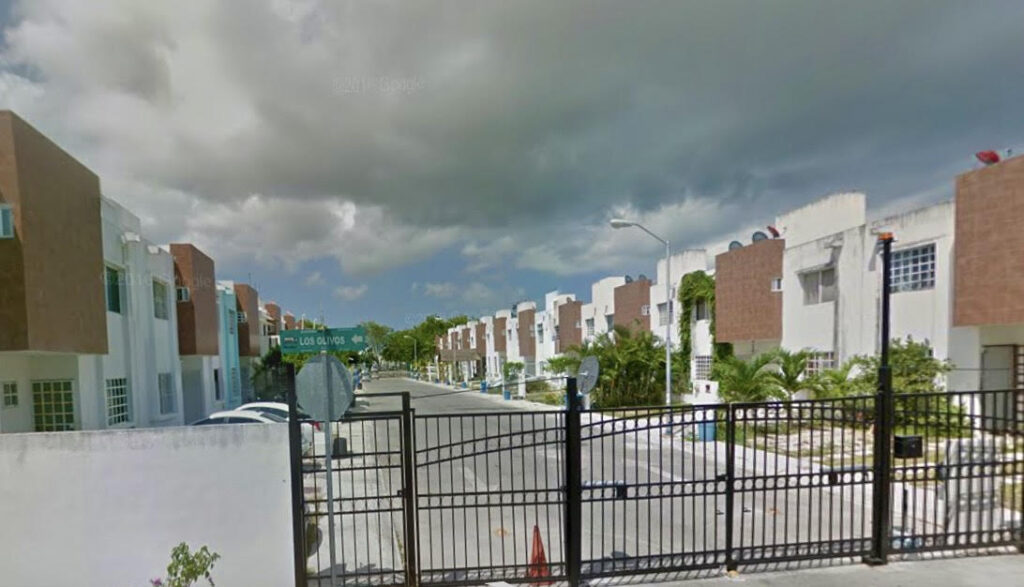
Playa Del Carmen has many fraccionamientos. Fraccionamientos and planned communities built by developers and these range in price, from entry level to higher end. Some of the most basic apartments can be about $25,000. Many town homes go for about $80,000. By dividing up the land in small lots and mass building homes, the prices can be more accessible to lower- and middle-class people. Mexico even has a program tied to your work to build credit to buy these homes.
Unlike many countries where housing has become unaffordable, these fraccionamientos allow Mexicans a chance to build equity and own a home.
3. Real Estate Marketing and Value Retention
Developers discovered that adding a gate dramatically increases property value.
- A “privada” or “gated community” can sell for 20–40% more per square meter than a similar open neighborhood.
- It creates a sense of exclusivity and organization — something that appeals to both Mexican middle and upper-middle-class families and foreign buyers.
- Controlled access means less through-traffic, cleaner streets, and lower noise, which helps preserve value over time.
4. Urban Planning and Weak Public Infrastructure
In many Mexican cities, public services and urban planning haven’t kept up with rapid population growth.
- Public parks, lighting, drainage, and waste management are often inconsistent outside gated developments.
- Gated communities provide self-managed systems: private roads, sewage, maintenance, and security — essentially mini-cities.
- Residents pay monthly HOA fees (cuotas de mantenimiento) to ensure quality, something they can’t always count on from local governments.
5. Cultural Factors and Class Segregation
There’s also a social and cultural dimension.
- Gated living reflects aspirations toward modernity, privacy, and social distinction.
- In many cities, it’s a way for the middle and upper classes to separate themselves from urban chaos, traffic, and poverty.
- For foreigners (especially from the U.S., Canada, or Europe), gated developments feel familiar and manageable.

6. Tourism and Expat-Driven Development
In resort areas like the Riviera Maya, Los Cabos, and Puerto Vallarta, gated communities serve a different purpose:
- They cater to foreign buyers who want vacation homes or investment properties with managed security and maintenance.
- Many of these communities include golf courses, beach clubs, and rental management — effectively mini-resorts that double as neighborhoods.
- The tourism economy encourages this structure, as visitors and retirees often prefer predictable, secure environments over local-style open neighborhoods.
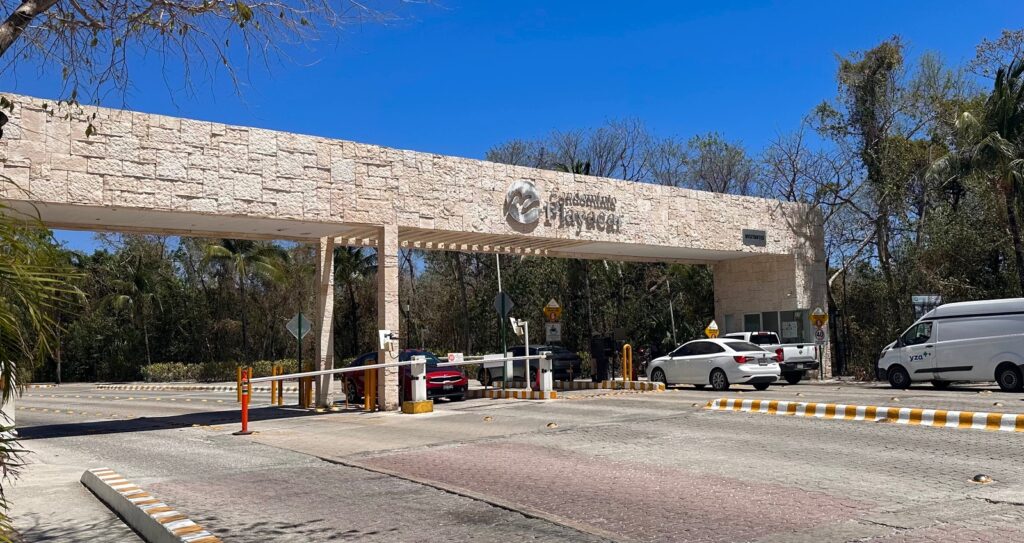
Examples: Playacar in Playa Del Carmen, Corasol, and Puerto Aventuras.
7. Government and Developer Incentives
- Municipalities often support gated projects because they generate tax revenue without requiring the city to maintain infrastructure inside them.
- Developers can build faster and cheaper in private land tracts with fewer bureaucratic hurdles.
- Over time, this has led to a privatization of urban space — where basic services and amenities are tied to one’s ability to buy into a gated area.
8. Lifestyle and Community Design
Gated communities in Mexico are also popular because they offer a more organized, predictable, and community-oriented lifestyle. Inside the gates, features like playgrounds, gyms, small parks, and event spaces help create a semi-private neighborhood culture where residents often interact and form a sense of belonging. Many parents view these environments as safer for children, thanks to reduced traffic and controlled access. The slower, quieter streets and the likelihood of neighbors sharing similar socioeconomic backgrounds further enhance the appeal for buyers seeking comfort, familiarity, and a cohesive community atmosphere.
Another important note is controlled development and zoning. In many cities in Mexico, it would appear that there are not too many zoning laws because of the ramshackle look to some areas. In most gated communities there are rules about opening a store or having a business in a residential property. There are also rules as to where business can go and how they operate in the community.
8. Downsides and Urban Consequences
While convenient for residents, the rise of gated communities also has long-term urban costs:
- Less public space: fewer plazas, open parks, or mixed-use areas. This is true of Playa Del Carmen, about half the city is gated communities. In Playa there are relatively few public parks.
- Longer commutes: many gated developments are on city outskirts.
- Social division: physical and psychological walls between classes.
- Reduced walkability and local commerce: stores and small vendors are often excluded.
Final Thought
Mexico’s gated communities are a mirror of both progress and inequality. They represent the country’s growing middle class and global real estate appeal — but also highlight weak public governance and social division.
Gated living in Mexico is not just a housing trend — it’s a reflection of how people build safety, comfort, and identity in a country still struggling to make its public spaces as reliable as its private ones.

About The Author

Be the first to comment